The life of an object
A collection grows richer when the stories, evidence and responsibilities behind its objects remain visible.
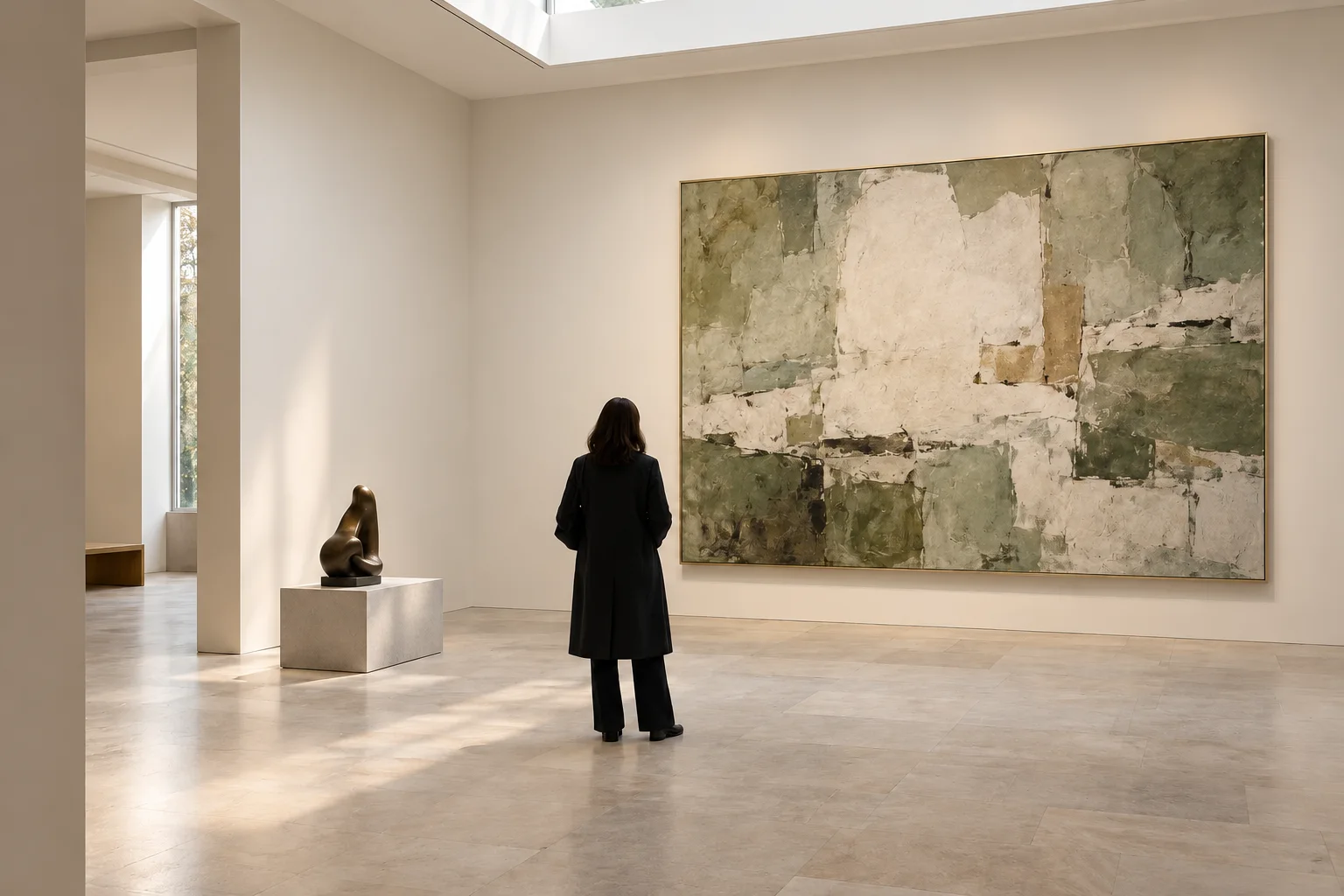
An artwork has a visible surface and a longer history. It may have passed through studios, homes, exhibitions, dealers and institutions before reaching its present place. Provenance research asks how that journey can be understood through evidence.
Begin with identification
A useful object record starts with what is actually in front of you. Note the maker or attribution, title where known, material, dimensions, inscriptions, labels and distinguishing features. Photograph the whole object and relevant details. Keep the date and context of the record.
ICOM’s Object ID standard provides a recognised framework for documenting cultural objects, including photographs and identifying marks. A consistent description helps connect a physical object to an invoice, exhibition record or earlier photograph. Avoid allowing an attractive description to outrun the evidence behind the attribution.
Build a chain of evidence
Provenance is more than a list of previous names. It is a history supported by records. Invoices, correspondence, inventory entries, catalogues and photographs may each establish part of a journey. Identify which document supports which statement, and keep a distinction between a known fact and a working hypothesis.
An unexplained gap is a question to investigate, not a space to fill with a plausible story. Copies can be useful, but record where the original is held and how the copy was obtained. A record of an exhibition may show that an object was present without resolving every question about ownership.
Ask the difficult questions
The history of an object can include displacement, coercion, theft or an export whose circumstances require closer examination. Those questions are part of understanding the object, even when they complicate a familiar narrative. ICOM’s museum ethics guidance connects provenance with due diligence and the prevention of illicit trafficking.
The V&A’s provenance research offers examples of institutions examining how objects entered their collections. Such research can evolve as archives become available or new information is shared. For a private collector, the practical lesson is to retain the evidence and seek qualified specialist review when there is a material uncertainty about attribution, ownership or lawful transfer.
Care for the record as well
A collection catalogue should travel alongside the collection’s care. Record condition assessments, conservation work, loans, movements and changes in attribution. When an object leaves temporarily, note where it is, who is responsible and which documents accompany it. These records serve a different purpose from an estimate of value.
The personal story belongs too: why the object was chosen, what drew your attention and what you learned by living with it. Keep that account beside, rather than blended into, the evidential history. A future custodian should be able to enjoy both. The pleasure of collecting and the discipline of documentation can deepen one another; each makes a different contribution to the life of the object.
If new evidence changes the story, preserve the earlier record and explain the revision. A catalogue that acknowledges uncertainty is more informative than one that quietly replaces yesterday’s certainty with today’s. Research remains a living part of the collection.
Supporting perspectives
Official guidance and original sources related to this article.
This article is general educational reading. Personal financial, legal and tax decisions depend on your circumstances and the applicable jurisdiction. Read our editorial approach.
Back to the Journal