A family archive for the future
What a family knows today should be understandable to the people who may need it tomorrow.

Families accumulate more than assets. They accumulate arrangements, responsibilities, preferences and stories. Much of that knowledge is held informally by one person. A considered archive turns it into something others can find and understand when the need arises.
Make a map before a mountain of paper
The first useful document may be an index. List the main categories of information, where the current records are kept and who can explain them. Property, accounts, business interests, insurance, family commitments and professional contacts each need a clear place in the map.
An index need not expose sensitive detail to every reader. It can identify the institution, the relevant contact and the location of an original document while keeping account credentials elsewhere. The practical aim is to reduce searching, not to create a single file containing every secret the family holds.
Include the human context
A list of objects says little about why they matter. Add the stories that would otherwise disappear: who made a gift, how a collection began or what a particular place has meant to the family. Keep a distinction between an expression of preference and a binding instruction.
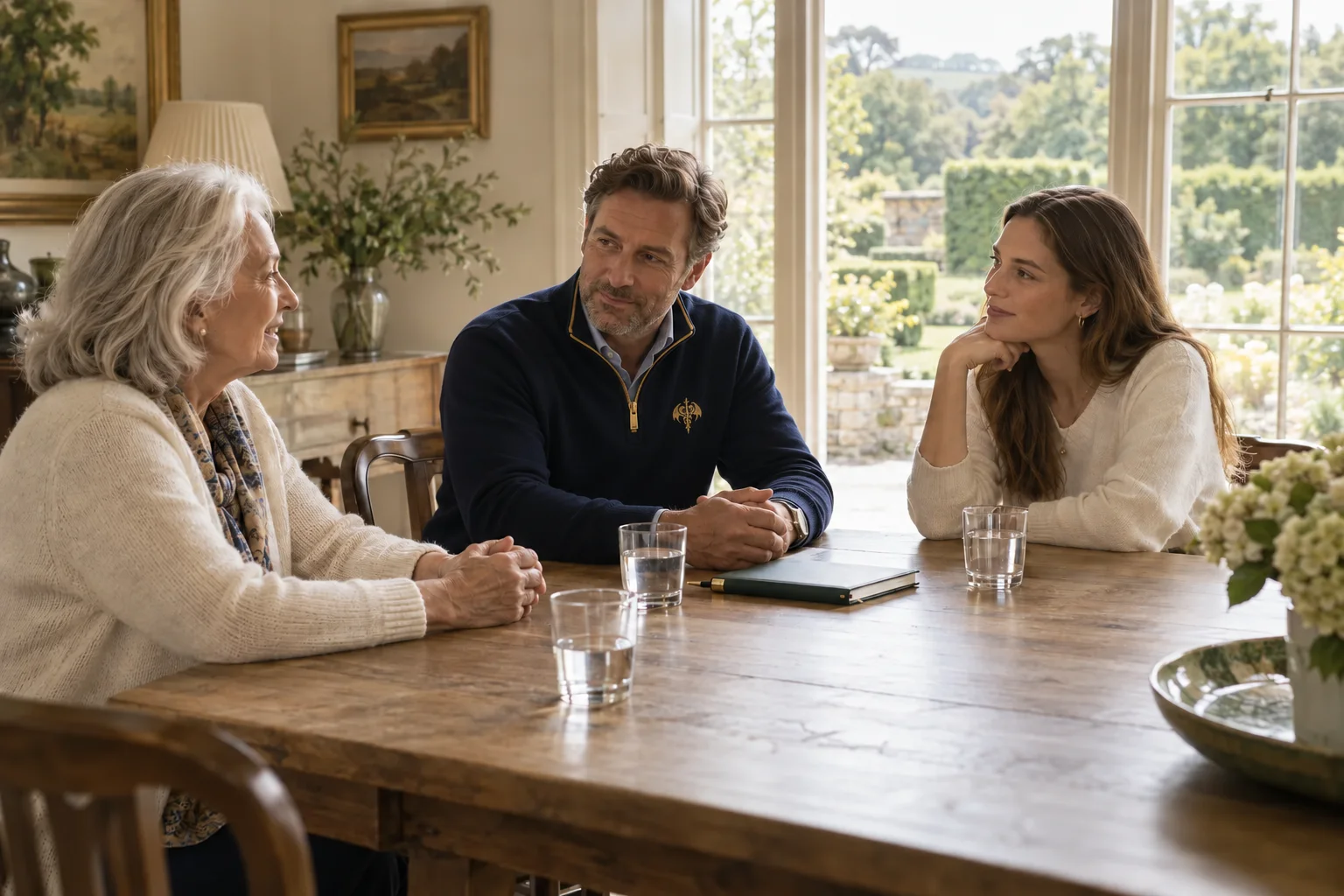
Family members may attach different meanings to the same possession. A conversation can reveal those differences early. Do not assume that the person who enjoys a collection is prepared to care for it, or that the person involved in a business wants to inherit an operating role. Listening produces better records than guessing.
Design for use
Choose a consistent way to mark the current version, the date of review and the custodian of each document. Keep superseded versions clearly identified. Review after a major family change or transaction as well as at a regular interval. An orderly archive can still mislead if it is no longer current.
Think about access in ordinary circumstances and in an emergency. Someone should know how to find the index without already needing the person who created it. Agree the boundaries of sharing and avoid distributing credentials casually. The result should be an understandable route through the information, supported by the appropriate professional documents and a family conversation that can continue.
Try a simple exercise: ask a trusted family member to locate one ordinary record using only the index. Any confusion reveals an opportunity to improve the archive while everyone has time to explain it.
Supporting perspectives
Official guidance and original sources related to this article.
This article is general educational reading. Personal financial, legal and tax decisions depend on your circumstances and the applicable jurisdiction. Read our editorial approach.
Back to the Journal